


Navigating Data Privacy Regulations: A Guide to GDPR Compliance in IT Systems.
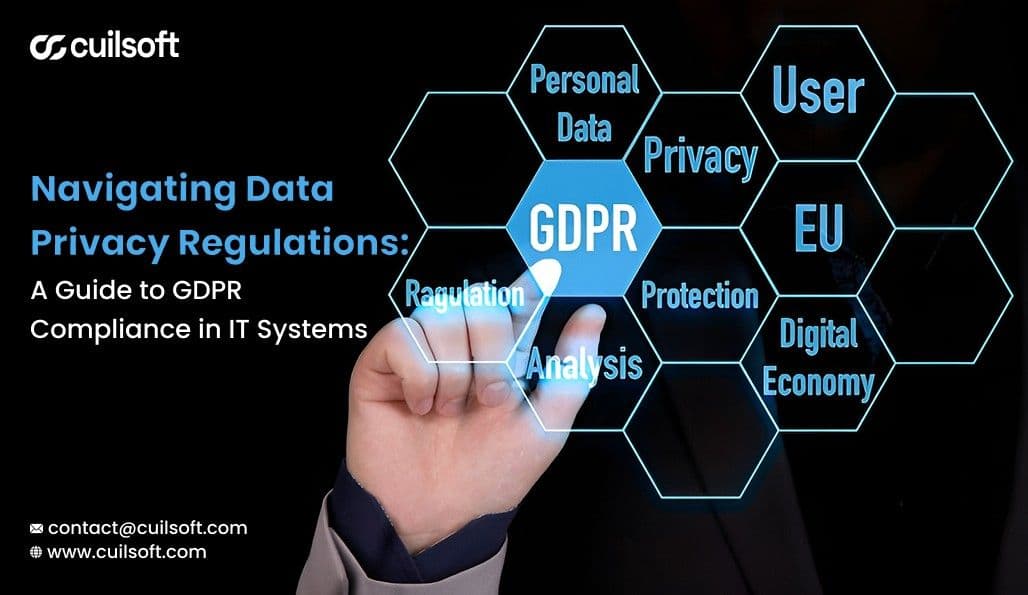
In today's digital age, data privacy has become a paramount concern for individuals and organizations alike. The General Data Protection Regulation (GDPR), implemented in May 2018, has significantly reshaped the data protection landscape, placing strict requirements on how businesses handle personal data. Ensuring compliance with GDPR and other data privacy regulations is crucial for not only avoiding hefty fines but also building trust with customers. In this blog post, we'll provide guidance on GDPR compliance in IT systems and how businesses can navigate this complex regulatory landscape.
GDPR applies to any organization that processes the personal data of individuals in the European Union (EU), regardless of where the organization is located. It sets out several key principles for the processing of personal data, including transparency, purpose limitation, data minimization, accuracy, storage limitation, integrity, and confidentiality.
To ensure GDPR compliance in IT systems, businesses should implement several key measures, such as:
- Conducting a data protection impact assessment (DPIA)
- Implementing data protection by design and by default
- Ensuring the security of personal data
- Providing individuals with their data protection rights
- Appointing a data protection officer (DPO) if required
In conclusion, GDPR compliance is a critical requirement for businesses that process personal data. By implementing the measures mentioned above, businesses can ensure that they are meeting their obligations under GDPR and are protecting the privacy of their customers.



 Home
Home Services
 Portfolio
 About
About Blog
Blog Contact Us
 Web Development
 Mobile Apps Development
 E-commerce Development
 Modules/Plugins Development
 Software/SAAS Development
 Digital Marketing
 UI/UX Design
 AI Development & Solutions